Skip to content

Services

We do training, strategy, and build, which means we can take you from “what is this?” all the way through to working solutions.

The full journey

AI adoption isn’t a single step. Most organisations move through a series of stages, and knowing where you are helps you decide what to do next.

  1. Stage 1: Early stageSense CheckCurious about AI but no shared understanding yet. Some informal use, but no clear picture of what’s possible or what the risks are.
  2. Stage 2: DevelopingSense MapHad some conversations, maybe a workshop or two. People are interested but you don’t know where AI fits or what to prioritise.
  3. Stage 3: IntegratingSense MakeYou’ve identified opportunities and possibly started using tools. Now you need to prove whether AI genuinely works in your context.
  4. Stage 4: TransformingBuild and strategyAI is embedded in multiple areas of your work and generating real value. You’re scaling what works and building internal capability.
  5. Stage 5: LeadingBuild and strategyAI is a core part of how your organisation operates. You’re innovating responsibly and contributing to sector-wide learning.

From “what is AI?” to “here’s what works for us”

Three engagements about how your organisation works, and where AI actually fits into it. You don’t need to run them in order, or run all three. Start wherever you’re stuck.

Sense Check

What is this stuff and why should we care?

For organisations at the early stage of their AI journey, the first challenge isn’t technical. It’s getting everyone on the same page: what AI actually is and what it can realistically do for your mission.

Sense Map

Where are we and what should we do?

You know AI matters. You might even have some ideas about where it could help. But there’s a gap between “AI could be useful” and “here’s what we should actually do.” Sense Map closes that gap.

Sense Make

Does this actually work for us?

Knowing where AI could help is one thing. Proving it actually does is another. Sense Make is a hands-on programme where your teams test AI on their real work, with our support, and generate evidence about what’s worth scaling.

From “here’s what works” to “here’s it working”

Most processes are a chain of tasks. Before AI, every task in that chain was done by a person. After AI, each task can be handled differently depending on what it needs.

Build work is about looking at your processes, figuring out which mode each task belongs in, and then making that real in software. The result is the same work, done faster and at greater scale, with human attention focused where it matters most.

Only Puppies, a prototype: a puppy under a blanket beside “Follow their journey from puppy to hero”
Hearing Dogs for Deaf People. Three revenue concepts prototyped and tested in three weeks. None proved viable for full implementation. The charity avoided an expensive mistake and gained strategic clarity about where to focus instead.

Validation and prototyping

Before committing budget, test whether an idea actually works. We build functional prototypes quickly and cheaply, so you can make investment decisions based on evidence rather than speculation. Sometimes the most valuable outcome is learning that an idea isn’t worth pursuing before you’ve spent six figures finding out.

Read the case study
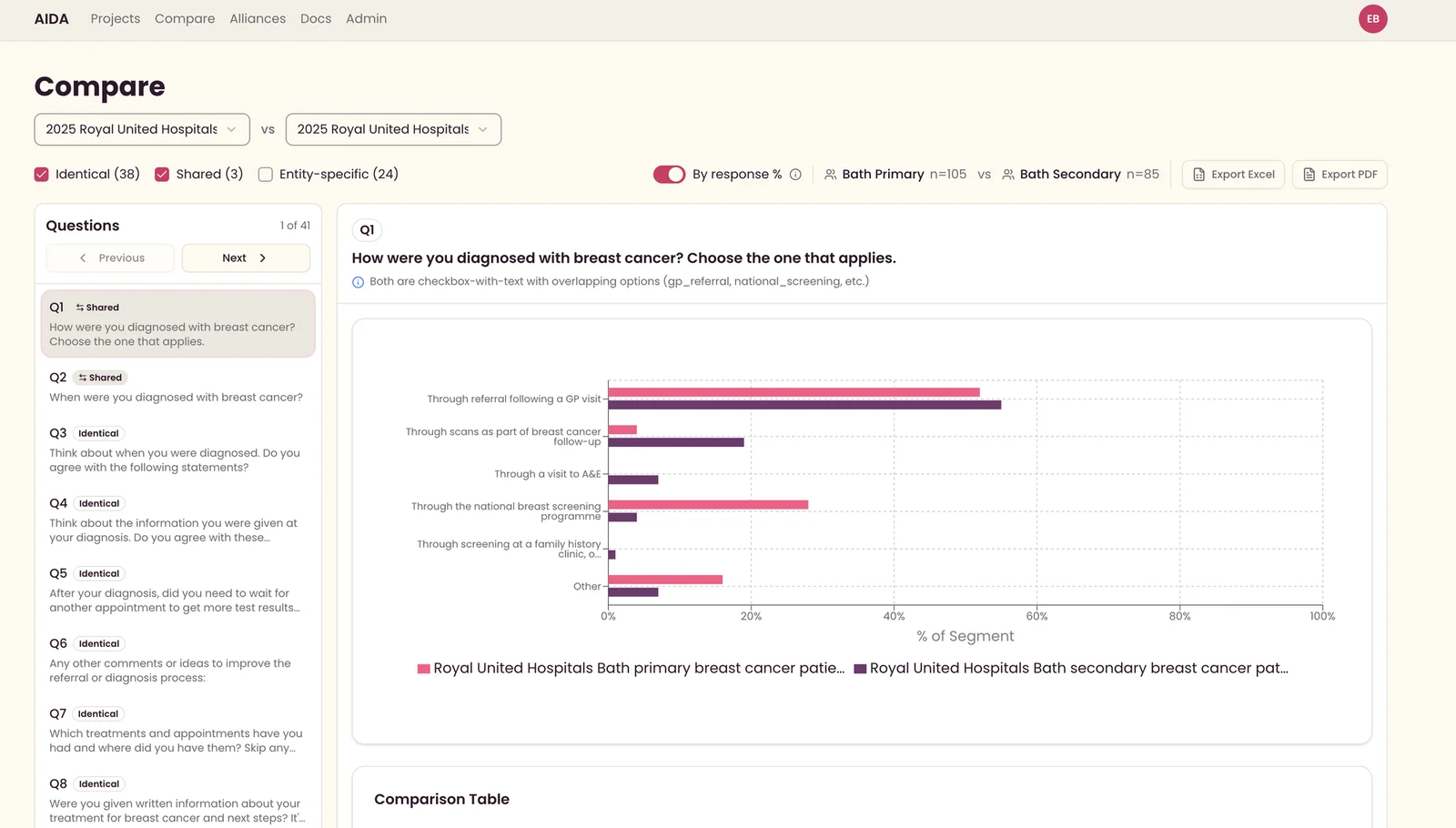
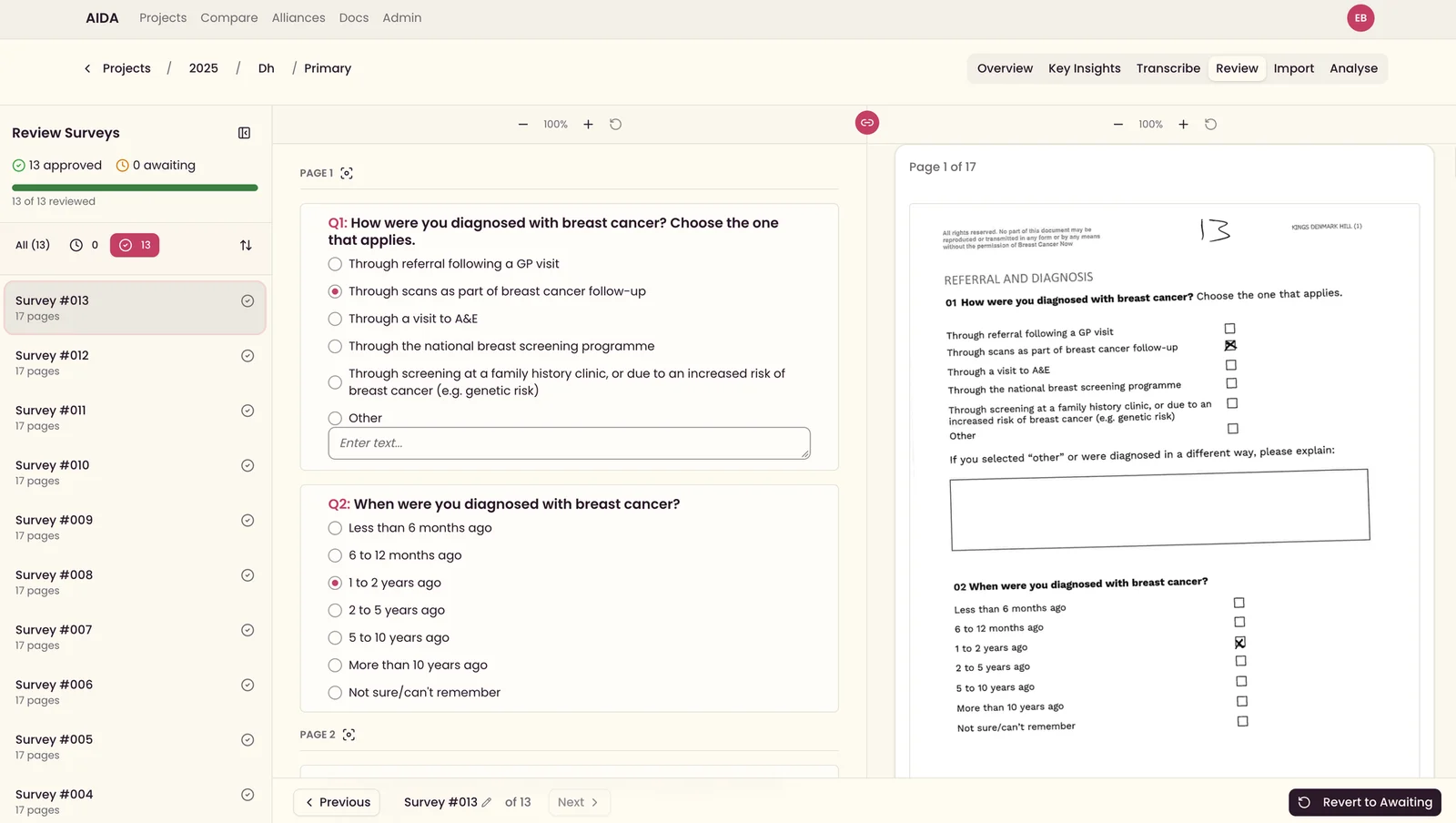
AIDA's review screen: a scanned paper survey beside its digital transcription
Breast Cancer Now. A dual-schema AI system that transcribes complex patient surveys across 20+ different NHS form structures. The four-person team can now work with considerably more hospitals without additional headcount. They named it AIDA.1 of 3

Custom AI tools

Purpose-built tools that solve a specific problem in your organisation. These are designed around how your team actually works, handling the messy reality of your data, your forms, your processes.

Read the case study
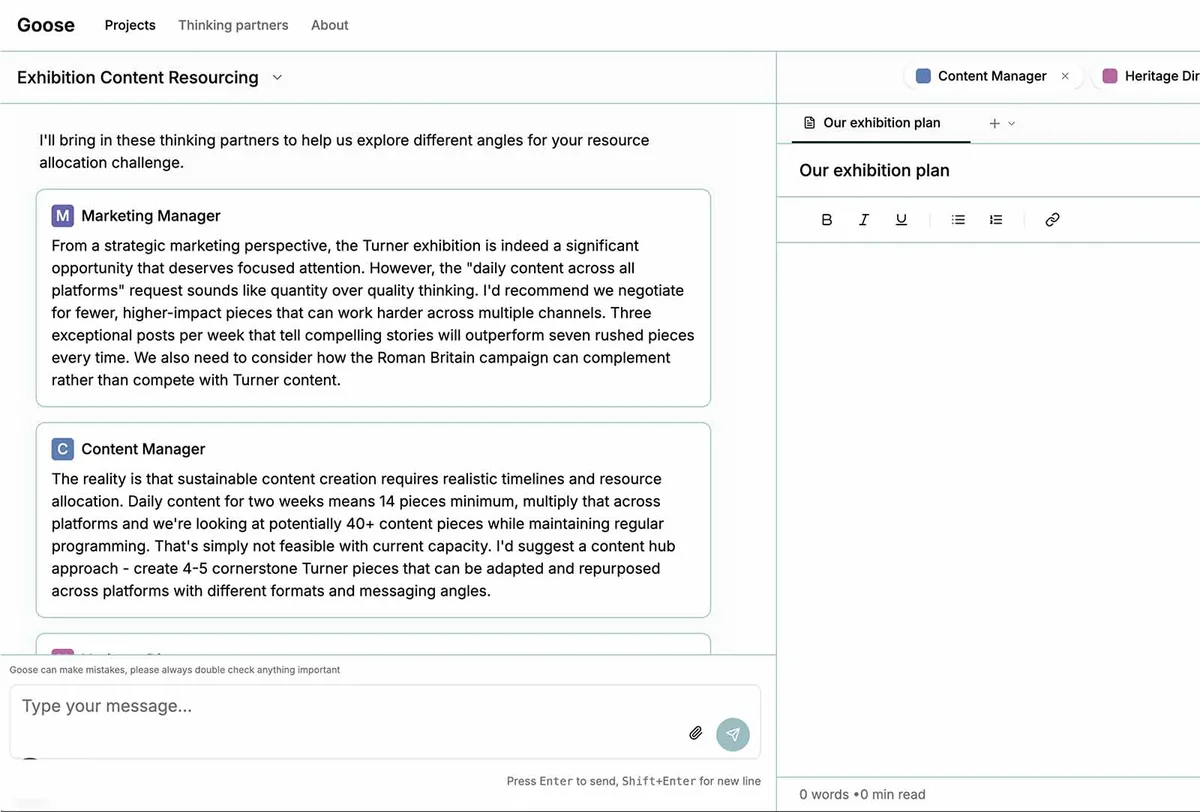
Goose, thinking partners for heritage professionals
Goose (Arts Marketing Association / National Lottery Heritage Fund). An AI assistant for heritage marketing professionals. We explored four fundamentally different technical approaches before landing on “thinking partners”, which are AI personas that help isolated professionals think strategically through diverse perspectives. Now in use by 40 heritage organisations across the UK.

AI products

Full product development for tools that serve your beneficiaries or your sector. This is the deepest work we do: research, exploration, multiple prototypes, user testing, and iteration until we find something that properly serves the need.

Read the case study

We don’t have fixed product tiers for build work because every organisation’s processes are different. But the work tends to fall into a few areas.