
Skip to content

Resources to understand where AI fits

Effective systems are always about the people involved and rarely about the technology.

The goose game from The Integration Problem: a pixel-art wetland of houses, and the choice between 'Be the glue' and 'Send the agents'
The goose game from The Integration Problem: a pixel-art wetland of houses, and the choice between 'Be the glue' and 'Send the agents'1 of 2

The Integration Problem

White paper

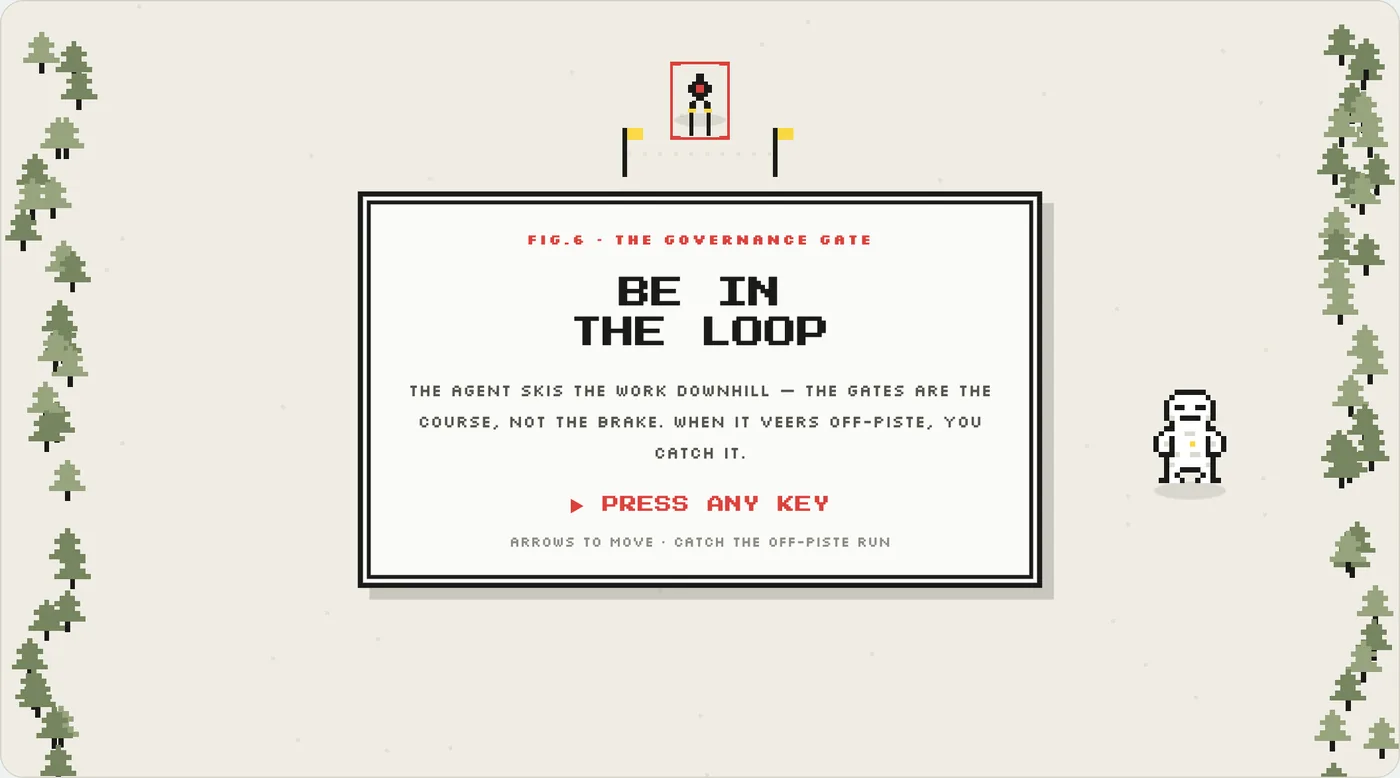
How we move from AI being a faster horse to something more useful is hard. And a bit boring. So we made some games to try and explain our thinking. Start as a goose, gathering a funder report from seven places scattered round a wetland. Carry every piece back yourself and feel the trudge, or send the agents and see what you get your attention back for instead. There's a yeti further in, on skis.

Read the report
Tools

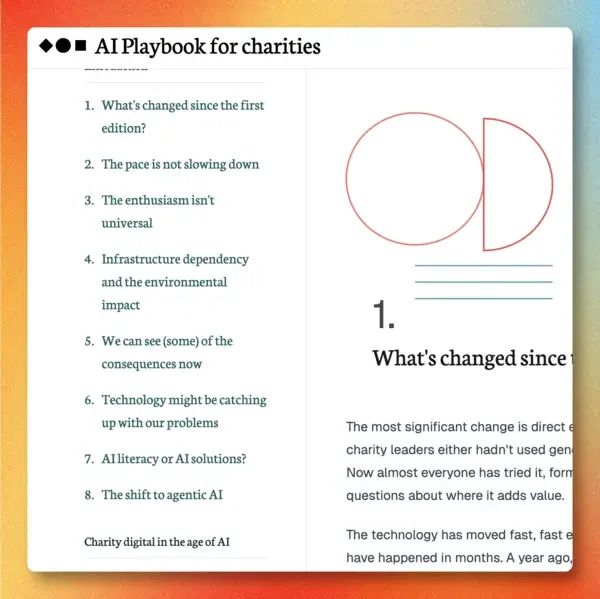
AI Playbook for Charities: a screenshot
AI Playbook for Charities1 of 5

AI Playbook for Charities (opens in a new tab)

Your practical framework on how your charity can adopt AI. The playbook provides clear pathways from basic tools to service transformation, helping organisations experiment safely whilst building lasting capability - without compromising your values or mission.

aiplaybookforcharities.com

AI Recipes for Charities (opens in a new tab)

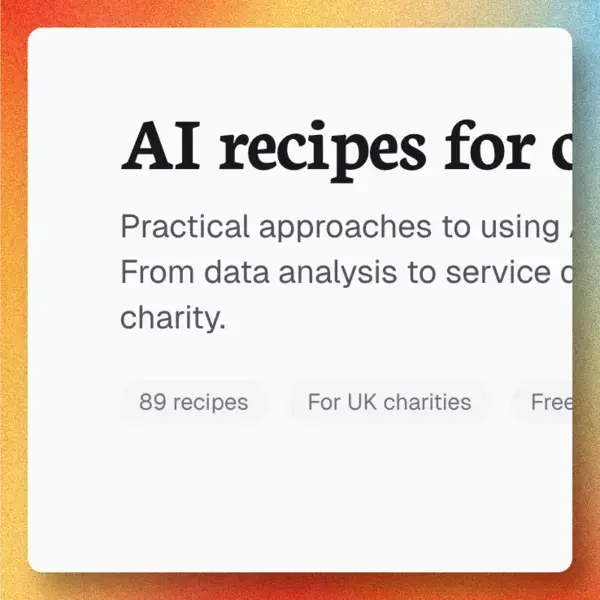
Step-by-step recipes to get started using different forms of AI in your work. From data analysis to service delivery you can find techniques that work for your charity whether those are traditional ML / AI processing or more recent agent, generative-AI, approaches to work.

airecipesforcharities.com

Charity Data Playground (opens in a new tab)

The data playground for charities is a tool to generate realistic charity data and then explore it using SQL. We created it for our work with charity teams looking to upskill with data and better use the signals their org has.

dataplaygroundforcharities.com

AI token calculator (opens in a new tab)

It's a faff trying to quickly tot up how much AI tokens might cost a project. This is a quick calculator we've found useful in workshops to give us a general sense of costing and whether it's worth the effort.

token-calculator-nu.vercel.app

Art of the AI Prompt (opens in a new tab)

Prompting, in 2026, is far less important than it once was but it still has value. This is an old project looking at how knowing about conversational academia could help how we structure interactions with language models like GPT3.5 or GPT4.1 to get the most out of them.

art-of-the-ai-prompt.com

Experiments

LLM Looper: a screenshot
LLM Looper1 of 3

LLM Looper (opens in a new tab)

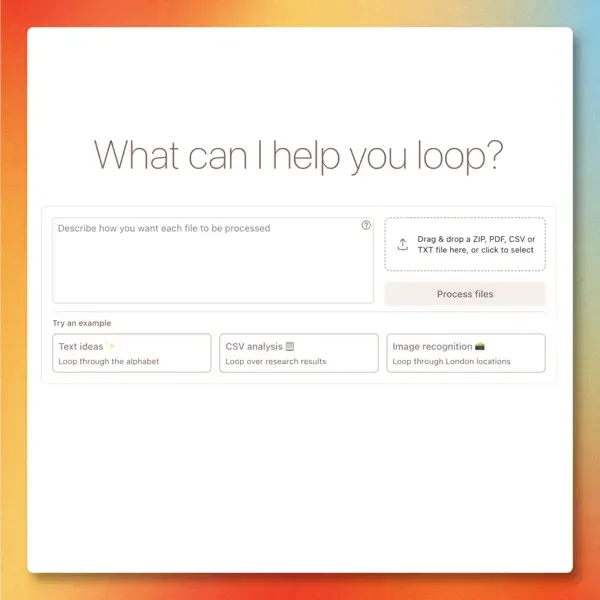
An experiment from 2024 that showed how we were looping over data. We realised in our work we were frequently looping over the same data doing multiple operations with LLMs and this was an experiment to see if we could create a web harness for that.

llmlooper.com

Choose Shapes Obliquely (opens in a new tab)

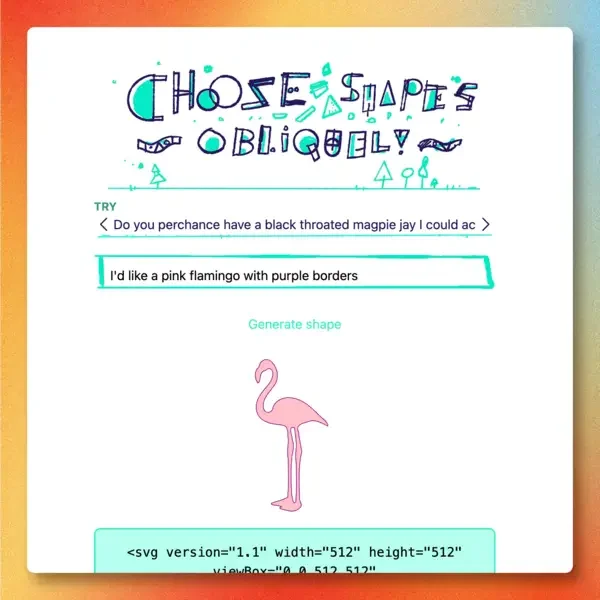
Trying to figure out what someone is trying to say to a computer isn't a new thing. This was a small experiment to demonstrate that pattern matching strings, rather than using generative AI, is still a useful technique for narrow tasks.

shapes-oblique.vercel.app

Ready, Set, AI (opens in a new tab)

A small experiment to try and get teams to be more adventurous with what they try and prompt for. Most people are surprised, even now, at how capable LLMs are at producing one-shot digital experiences. This aimed to get them to the 'aha' moment a little quicker.

ready-set-ai.vercel.app