About
We know AI deeply. We know the sector just as well.
Make Sense Of It pairs a decade of machine-learning engineering with two decades inside UK charities. Most teams doing AI for charities have one or the other. Having both, to real depth, is the point.
Why it matters
The gap where AI projects fail.
Most charities trying to use AI end up working with people who can build software, or people who understand the sector - rarely both, and almost never both to any depth. That gap is where the work fails. The engineering looks fine in a demo and falls over in production. Or the sector judgement is there, but nothing ever ships.
We’ve spent long enough on both sides to know where each one breaks. Three years of building production AI for UK charities - National Lottery Heritage Fund funded Goose, AIDA for Breast Cancer Now, or clinical simulations with The Learning Lab - turned that into a method we call Loop: messy inputs in, a defensible result out, a person signing off.
Who we are
Our founders.

Edd Baldry
Co-founder · engineering
Has been building machine-learning systems since 2016 and production software for far longer. Led the Human-Machine Interaction team at Dyson and founded an AI-driven health-technology startup. Engineer first, designer second.
Builds the parts that have to hold up in production - where a chatbot demo and software a trustee can defend are not the same engineering problem.
LinkedIn →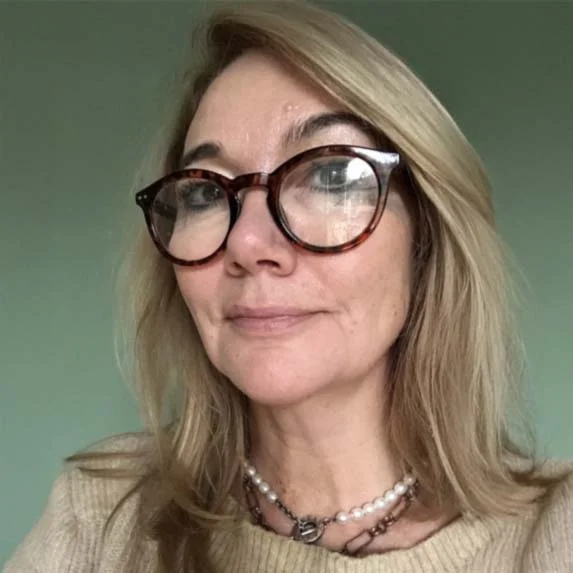
Suzanne Begley
Co-founder · sector
Two decades in nonprofit digital. Co-founded and ran Public Life, the award-winning charity-sector agency, shaping digital programmes for Mencap, Macmillan and YoungMinds. Led the digital transformation programme at Cruse Bereavement Support, diversifying service delivery to reach more bereaved people.
Knows what charity boards actually approve, what staff actually adopt, and what beneficiaries actually need. The reason the work never drifts into the theoretical.
LinkedIn →What we believe
What the work has taught us.
Production beats exploration.
The value shows up when something is in daily use. Discovery and prototyping have their place, but they’re the means, not the end. We start with “what would you like back from your team’s week”, not “what could you do with AI”.
Engineering depth is not optional.
Production AI for high-stakes work is a different problem from a chatbot demo. The difference shows up in the things you can’t see at pitch time - and it’s where most charity-AI work quietly fails.
Sector experience compounds.
What trustees approve, what DP leads worry about, what frontline staff will actually use - none of it is in a textbook. It comes from twenty years on the receiving end of every version of the conversation.
Everything has to be defensible.
Every figure traced to its source, every action audited, every decision attributable to a person and a time. In this sector, “the software worked” has to also mean “the software can be explained to a funder, a board, a regulator”.
Get in touch
Tell us about the task.
Not the technology. Not the strategy. The operational task that’s eating your team’s week - and what would change if it stopped.
hello@make-sense-of-it.comWe read everything that lands in this inbox personally. You’ll hear back within two working days.